It is with great sadness we share that Dr. Vincent C. (Vince) Henrich, professor emeritus, passed away on July 8, 2026.
Henrich was a member of the Department of Biology at the UNC Greensboro for more than three decades. During his career he built a distinguished research program in developmental genetics, trained generations of undergraduate and graduate students, helped expand biotechnology education at UNCG, and played a central role in several interdisciplinary initiatives across the University.
After growing up in Ohio, Henrich earned a bachelor’s degree in Biology from the University of Notre Dame, where he was also a member of the varsity tennis team. He received his Ph.D. in Genetics from The Ohio State University before pursuing postdoctoral research at Brandeis University. Subsequently, Henrich joined the laboratory of Dr. Larry Gilbert at the University of North Carolina at Chapel Hill, where he became involved in studies of insect steroid hormones and developmental genetics.
Henrich joined the UNCG Department of Biology as an assistant professor in 1990 and was promoted to professor in 2002. His research focused on the molecular mechanisms by which steroid hormones regulate development in Drosophila melanogaster. Much of his work examined the ecdysone receptor and the gene networks that control insect metamorphosis, contributing to a broader understanding of nuclear receptor function and hormone-regulated gene expression. His laboratory attracted continuous external support from federal agencies, the State of North Carolina, and private foundations, and his publications became widely cited in the fields of developmental biology and molecular genetics. During his career at UNCG he also served as a visiting professor at the University of Zurich, establishing collaborations with researchers studying developmental biology and gene regulation.
Research in Henrich’s laboratory was closely integrated with student training. Undergraduate and graduate students participated directly in experimental design, molecular analysis, and publication of research findings. Many former students continued their education in graduate or professional programs or pursued careers in biotechnology, medicine, and academic research.
Henrich taught Genetics throughout most of his career at UNCG. He expected students to understand the logic behind genetic analysis rather than simply memorize facts, and he introduced many biology majors to molecular genetics through this course. Recognizing the growing importance of biotechnology, he expanded Introduction to Biotechnology into a four-credit lecture and laboratory course that emphasized hands-on experience with molecular techniques. He also secured support from the North Carolina Biotechnology Center to modernize instructional laboratories and served the Center as a grant reviewer.
Within the biology department, Henrich was frequently consulted for his expertise in molecular biology. He worked with Dr. Parke Rublee to develop molecular methods for detecting bacteria that increased in abundance as pollutants increased in aquatic systems. Their collaboration led to several patents and the founding of a company to use molecular techniques to detect pollutant tolerant bacteria. The project illustrated Vince’s interest in applying basic molecular biology to practical environmental problems.
Henrich also contributed to several initiatives beyond his own research program. He helped develop UNCG’s Master’s in Genetic Counseling program, recognizing the growing role of genetics in clinical practice. The program has prepared genetic counselors for more than two decades and remains one of the University’s important graduate programs in the health sciences.
As Director of the Center for Biotechnology, Genomics, and Health Research, Vince encouraged collaboration among faculty from biology, chemistry, health sciences, and related disciplines. Under his leadership the Center supported interdisciplinary research and strengthened connections between basic science and its applications in biotechnology and human health.
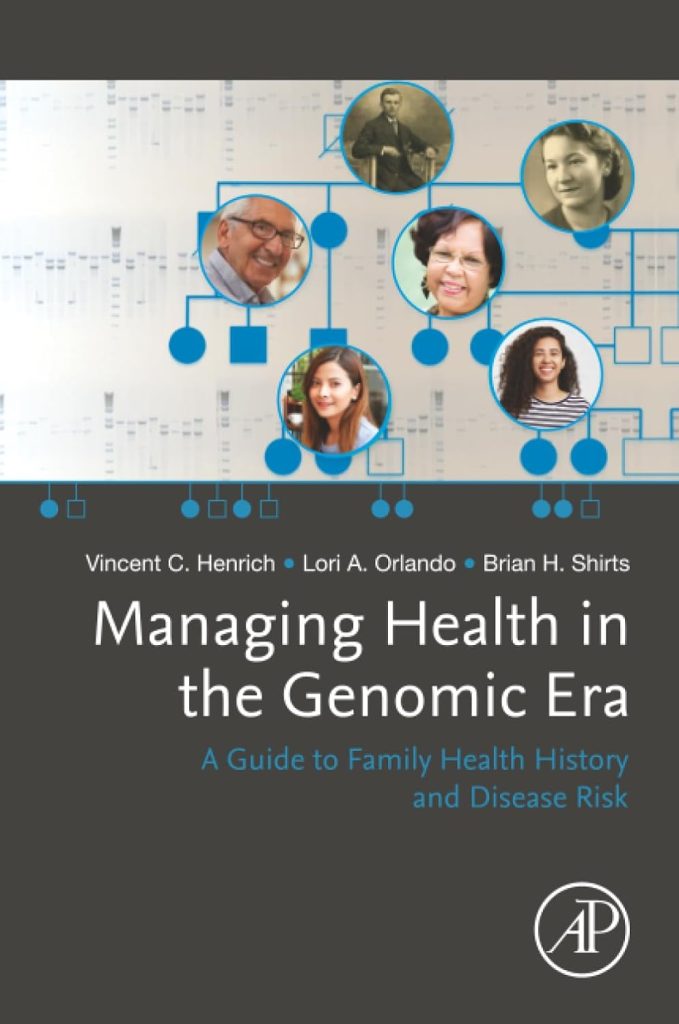
Following his retirement in 2015, Henrich continued writing about genetics and its applications to medicine. He co-authored Managing Health in the Genomic Era: A Guide to Family History and Disease Risk, a book intended to help readers understand how family history and genetic information can inform healthcare decisions.
Outside the University, Henrich was active in the Summit Rotary Club of Greensboro, where he served as club president. Colleagues knew him as someone who enjoyed discussing science, solving research problems, and helping others learn new techniques. His laboratory influenced the careers of many students and collaborators, and his work helped establish molecular genetics and biotechnology as important strengths within the Department of Biology.
Henrich’s contributions remain evident in the students he trained, the research he published, the programs he helped establish, and the colleagues with whom he worked. His career reflects a sustained commitment to scientific discovery, undergraduate and graduate education, and the continued development of biology at UNCG.
Written by:
Dr. Malcolm Schug, Professor and Head, Department of Biology
Dr. Parke Rublee, Faculty Emeritus, Department of Biology
Dr. Robert Cannon, Faculty Emeritus, Department of Biology