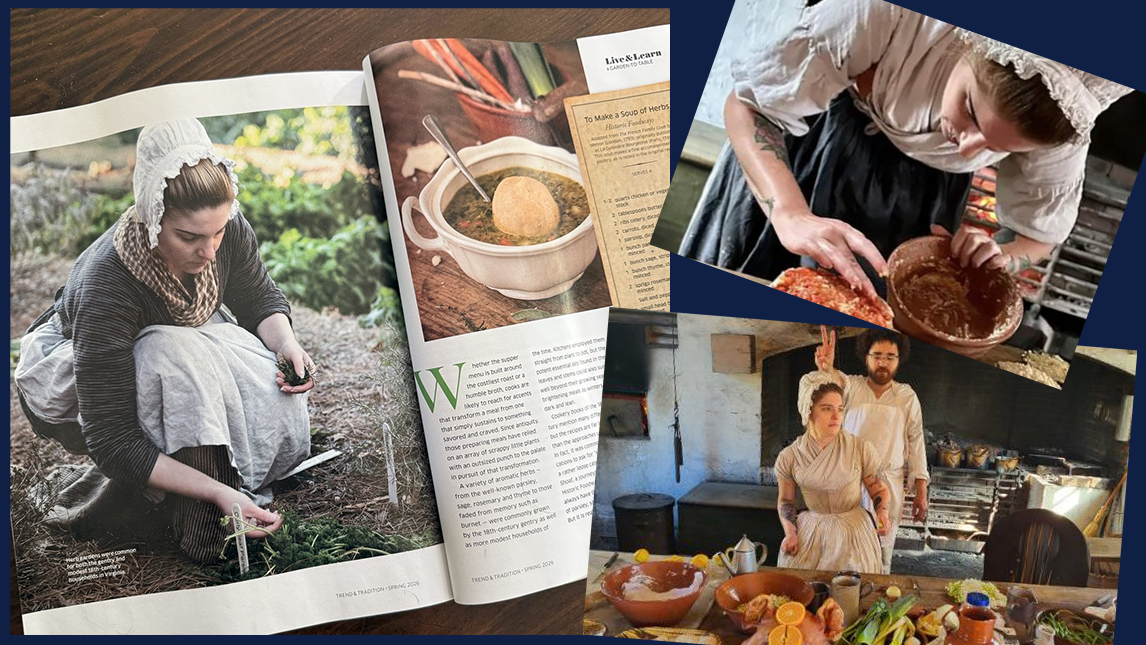
Most people don’t grow up planning to make a career out of preparing 18th century dishes.
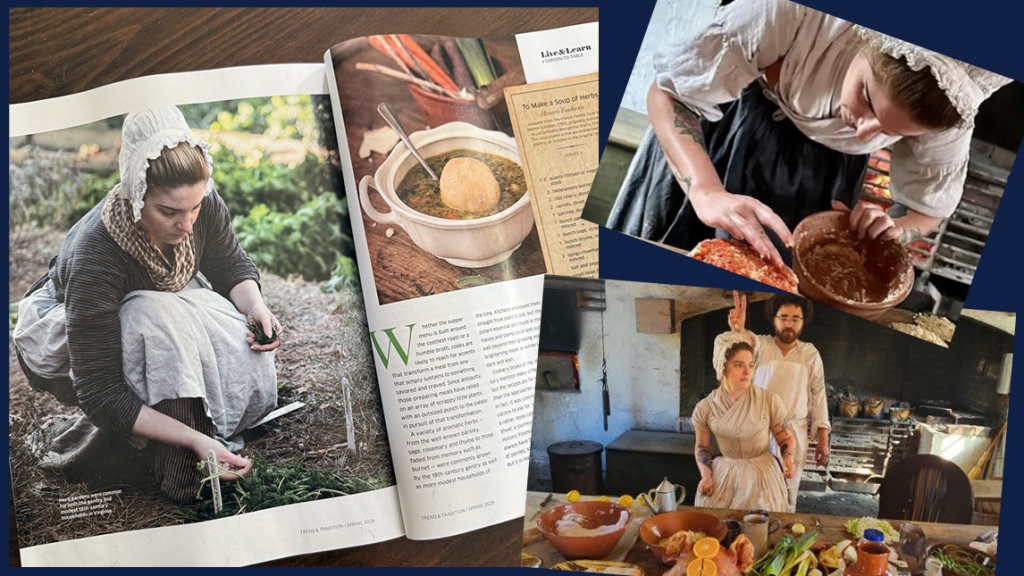
Yet nearly every day, UNCG alumna Abbey Shoaf ‘16 stands before hundreds of visitors at Colonial Williamsburg, recreating historically accurate recipes over a fire, discussing archaeology and food history, and bringing the past to life through conversation and demonstration.
For Shoaf, who triple majored in classical studies with a concentration in archaeology, history, and acting, the career feels like an unexpected dream come true.
“I thought if I could just find a career that took all the things I loved and put it together in one job, I could do that job and I could do it happily forever,” Shoaf says.
At Colonial Williamsburg, she found exactly that.
Bringing the Past to Life at Colonial Williamsburg
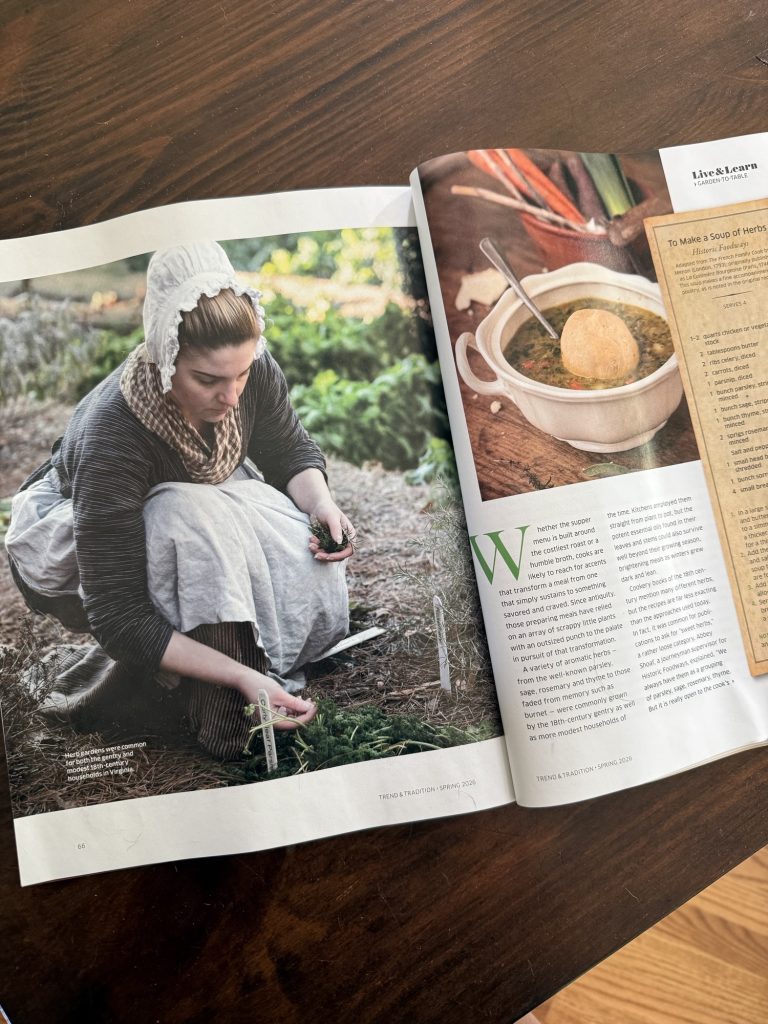
Shoaf serves as a journeyman supervisor, helping oversee historic foodways, at Colonial Williamsburg’s historic kitchen. Historic foodways explore how people grew, prepared, shared, and consumed food in the past, as well as its cultural, political, and economic significance. Shoaf’s position combines historical research, public engagement, cooking, archaeology, education, and performance.
Each morning begins long before visitors arrive.
The team starts by preparing the kitchen, lighting fires, bringing in fresh water, setting out display food, and gathering coal. Before the kitchen opens, Shoaf also handles administrative responsibilities.
Once the doors open, the kitchen becomes a living classroom.
From 10 a.m. to 5 p.m., Shoaf and her colleagues recreate documented 18th century recipes while engaging visitors in conversations about food, culture, economics, and daily life in Colonial Virginia. On busy days, more than 1,000 people may pass through the kitchen.
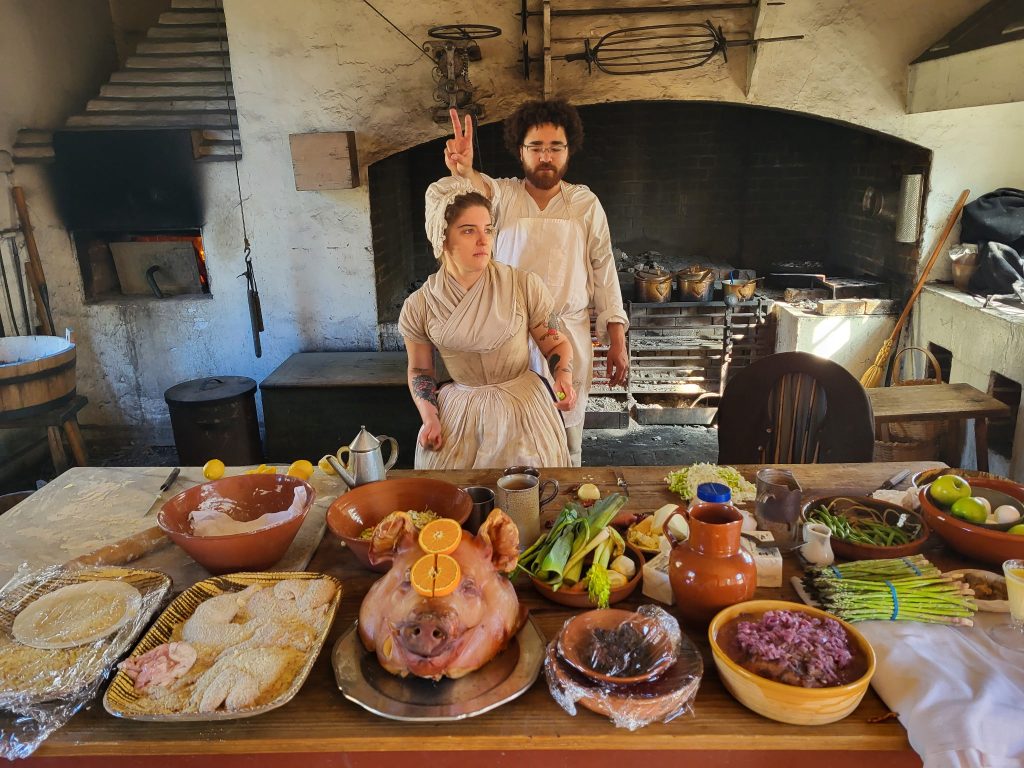
“We make three or four, sometimes five different historically accurate 18th century recipes for the table every day,” Shoaf shares.
Meals are based on seasonal ingredients, many grown onsite, and prepared using documented 18th-century cooking methods and tools.
However, the kitchen staff’s roles go beyond just cooking.
Visitors’ questions often lead to discussions about colonial agriculture, the British Empire, the slave trade, food preservation, and daily life in the 18th century.
“It’s not just about the food,” Shoaf explains. “It’s about what everything happing 250 years ago and how it ties back into what we do in the kitchen. We hopefully teach people about food, but we also teach people about the social, cultural, and political implications of food and what that means to the wider world in the 18th century as well.”
How Three Majors Led to One Career
Years before she found herself in Colonial Williamsburg’s kitchen, Shoaf arrived at UNCG planning to focus exclusively on theater.
Coming from a family with a performing arts background, Shoaf expected to become an actor. However, transferring to UNCG with so many credits already completed gave her room to explore other interests.
The decision to take a classical warfare course with Dr. Jonathan Zarecki because it sounded fun, would become a defining choice that changed the trajectory of her future.
“I went up to [Zarecki] after class, introduced myself, shook his hand, and I was like ‘this is what I want to do,” she recalls.
She explained to him that the topics discussed in class were things she always loved but hadn’t had the time to focus on because of her involvement with theater. He asked, “Well, have you heard about classics?”
That question led to Zarecki helping Shoaf realize adding majors in history and classical studies would fit into her schedule and help her merge personal interests into professional pathways.
She uses the training received in all three disciplines in her current position.
The history degree supports the extensive research required for interpreting colonial life. Her archaeology training shapes how she investigates material culture and historical evidence. Her acting background helps her connect with visitors and hold their attention throughout the day.
“Our kitchen is open to the public five days a week, 40 hours a week,” Shoaf says. “We don’t have a scheduled or scripted tour.”
Instead, conversations happen organically as visitors move through the space.
“It is like I am giving an eight hour show every day,” she explains. “We give our love of what we do to them in a way that is hopefully fun and engaging and not scripted and not boring. Because if people don’t come in and have a good time with what we give them, I’m not doing half my job.”
An archeologist in the Kitchen
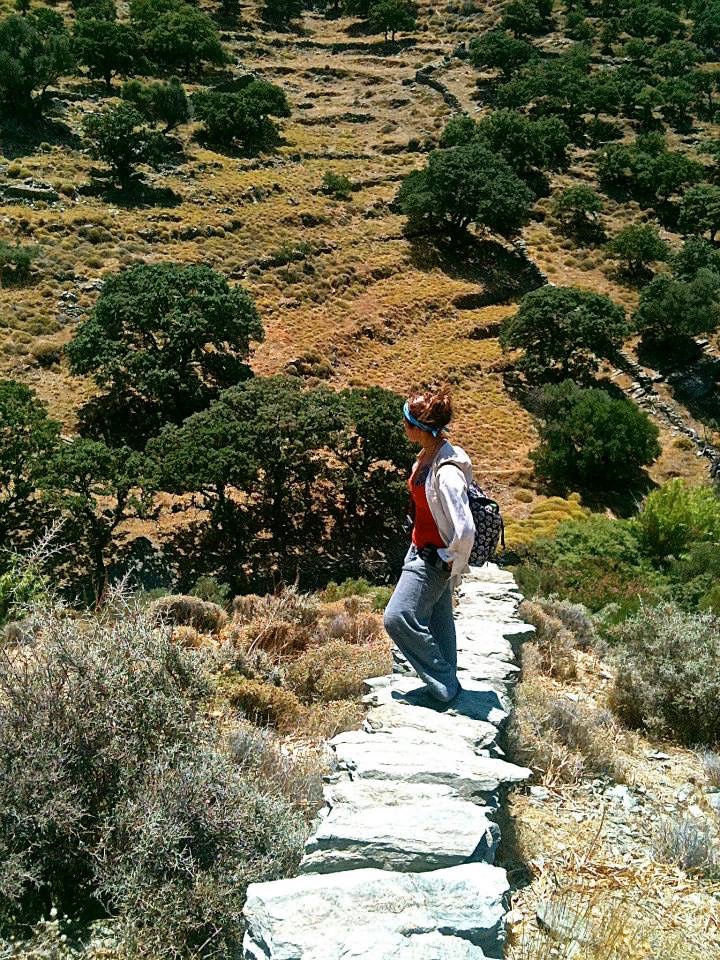
One of the most unique aspects of Shoaf’s work is how closely it aligns with the archaeological fieldwork she first encountered at UNCG.
As a student, she spent two summers participating in the Kea Archaeological Research Survey in Greece under the direction of Dr. Joanne Murphy. The project explores the reliability of surface surveying as an archaeological method. It helped Shoaf realize archaeology was more than an academic interest.
“It changed my life,” she remembers. “I really learned that archaeology was where my heart was and what I was passionate about, and it completely rerouted what I wanted to do professionally.”
Throughout the program, Shoaf recognized the growth in her character and work ethic. She also credits Murphy for setting a standard of hard work—and the realization that you can actually work hard and play hard.
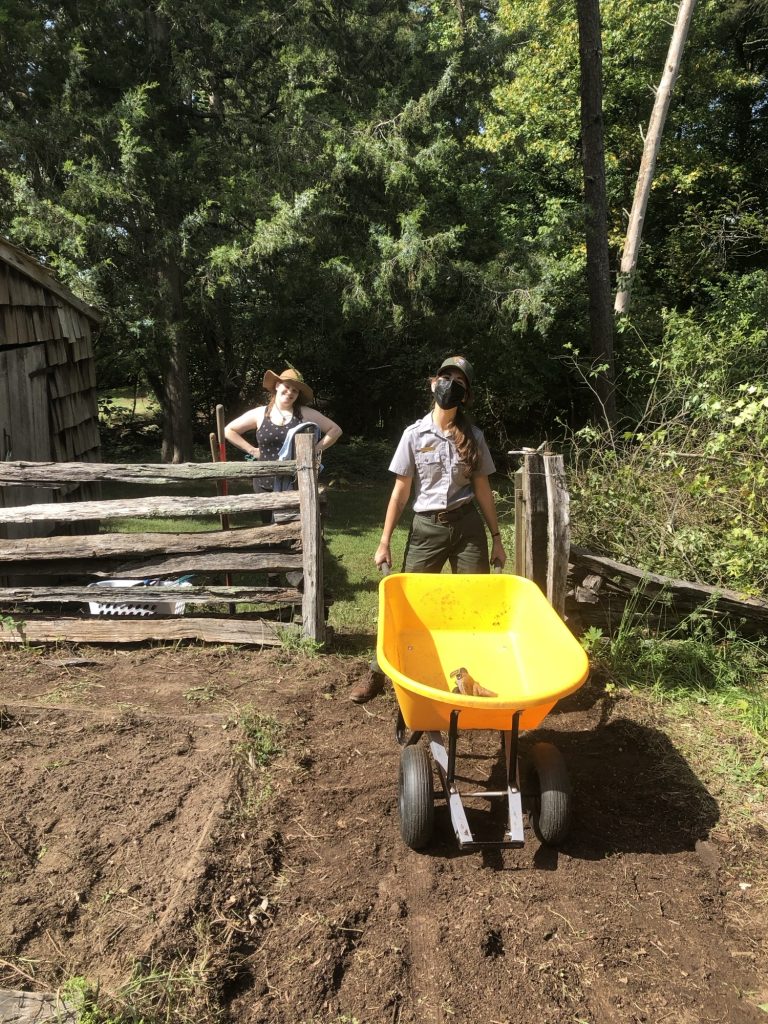
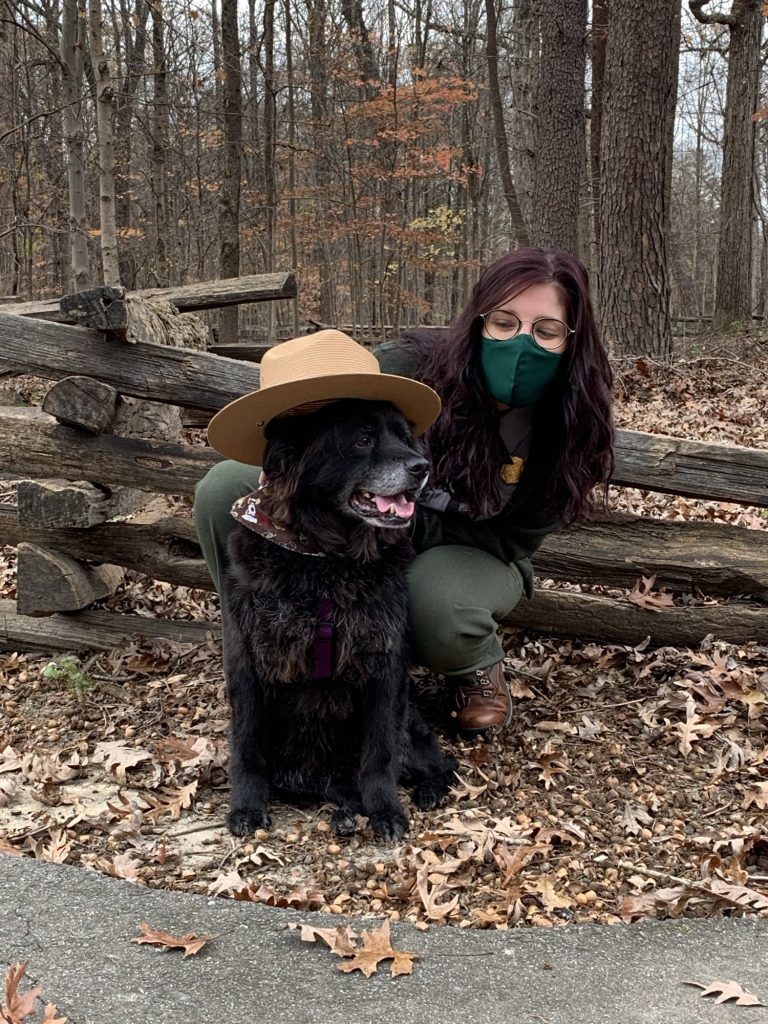
Before starting her current position, Shoaf worked as an interpretive park ranger at Guilford Courthouse National Military Park, where she was introduced to historic foodways. Interested in developing her own area of expertise, she began researching the underrepresented Hoskins Farm site and what may have been grown and prepared there nearly 250 years ago. That work sparked the career focus she pursues today.
“Archaeology and food go so closely together in the sense that they are both physical, tangible connections to people from the past,” she says. “I can look at a historic recipe that maybe someone hasn’t made in 300 years. I can make it in our kitchen, and I can physically see and I can physically touch and I can physically taste something that somebody 300 years ago also had the opportunity to make and to taste and to share with people.”
Becoming a Master of the Trade
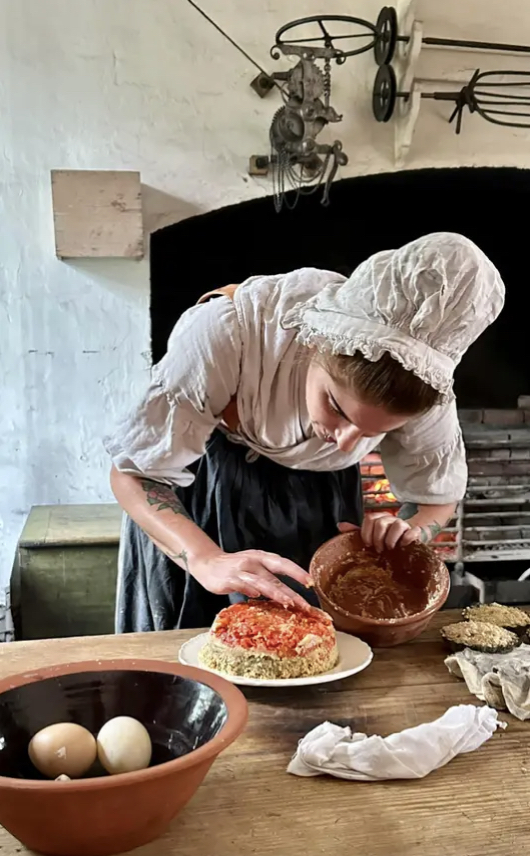
Earlier this year, Shoaf completed Colonial Williamsburg’s demanding five-year apprenticeship program, a process requiring historical research, public presentations, recipe mastery, and a final apprenticeship dinner that she describes as the most challenging experience of her career.
For the kitchen trade, she planned, prepared, and served a historic dinner, with a first course of 10 dishes and a six-dish dessert course for a panel of 10 judges. Candidates must also complete either a 10-page research paper or a 45-minute conference presentation.
Shoaf is now preparing for the next stage of professional development. At Colonial Williamsburg, a person can become a master of their trade by developing and defending a portfolio of work, after spending at least one year as a journeyman.
The current master of historic foodways is retiring at the end of this summer. Shoaf has already undertaken many of the master’s tasks as they prepare for this transition. She can officially present her portfolio next March and receive her master’s papers. Her specialized research focuses on the archaeology of food and what archaeological evidence can reveal about the foodways of enslaved and Indigenous communities in colonial Tidewater Virginia.
As she looks back, Shoaf credits the faculty and opportunities she encountered at UNCG with helping her discover a path she never expected. Passionate professors and a close-knit community of smaller departments encouraged her to pursue multiple interests at once and helped shape her professional future.
“If I hadn’t been a part of theater and if I hadn’t been a part of classics, I wouldn’t be getting to do what I do now, and I wouldn’t be the person that I am now.”
Shoaf’s Fun facts
- Favorite Ingredient to Use: It’s something called cochineal. Cochineal is a little scaled insect that lives on cactus plants in Central America. When you dry them and crush them like a spice, they turn into a natural scarlet dye. They were used in textiles to dye leather and cloth. They also used it to color food red, and it’s still used today. Ruby red grapefruit juice is still colored with cochineal.
- Least Favorite Ingredient to Use: The organs are weird. They ate a lot of weird parts of the animal that we don’t eat anymore. The tripe, which is the second stomach lining of a cow, is probably my least favorite. It stinks when you cook it, it’s fuzzy, and it’s honeycombed.
- Place Visitors Should Check Out at Colonial Williamsburg: Come hang out with us in the kitchen! Besides that, we have just reopened the Williamsburg Bray School, a school for free and enslaved Black children founded in 1760. It had been lost for over 100 years. They didn’t know where the building was or what happened to it. We were doing renovations on a different building in town. They had to remove the facade of the building and found the original structure of the Williamsburg Bray School underneath. They’ve relocated [the school] back to where it is almost in its original location.
Story by Amanda Kennison, College of Arts & Sciences
Photography courtesy of Abbey Shoaf ’16
Envision the future by unlocking the past.