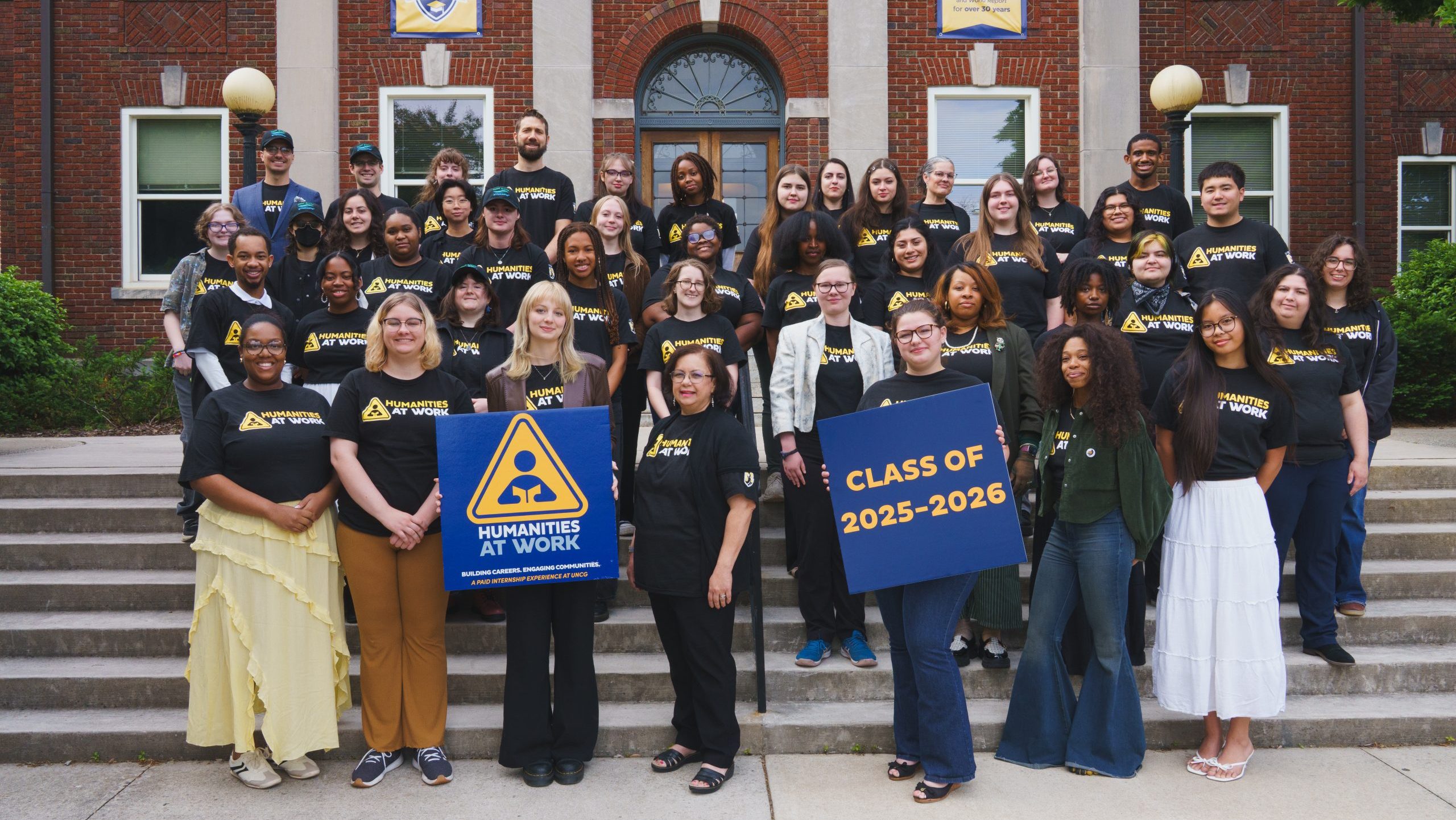
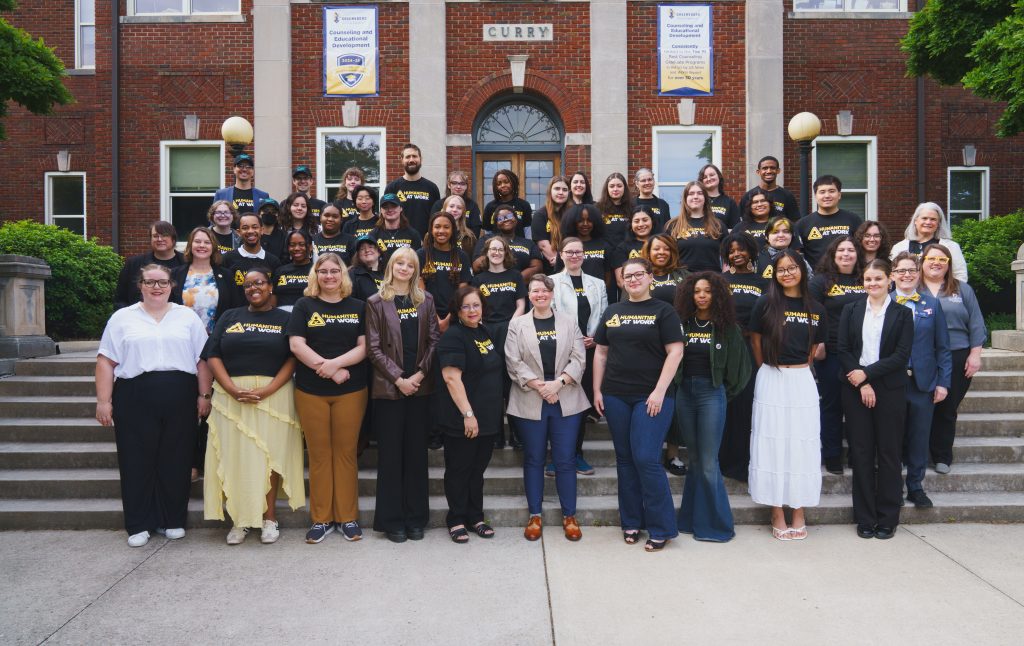
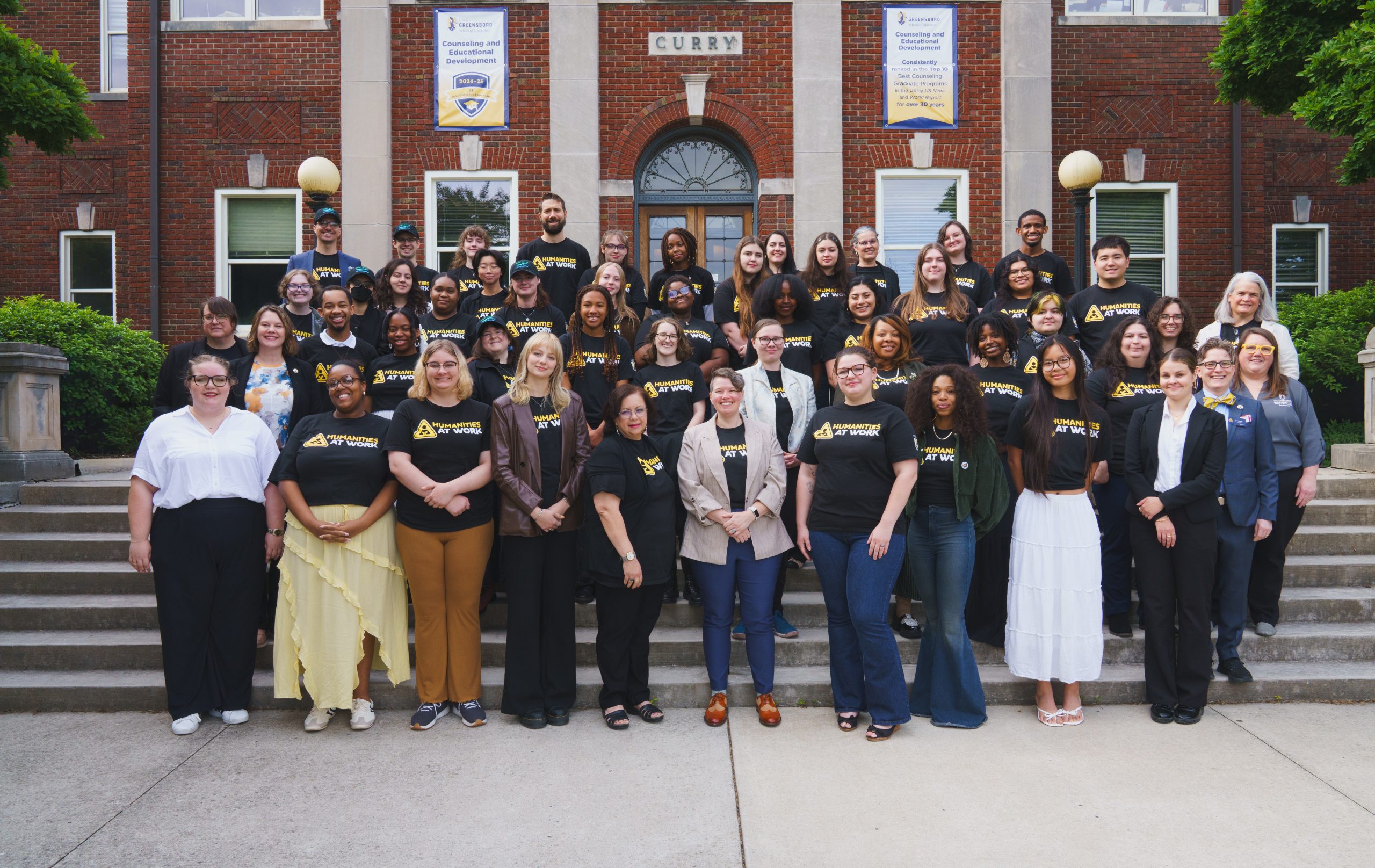
Humanities at Work (H@W) marked a major milestone on May 1, as UNCG and local community members gathered to celebrate the 43 students completing the program this academic year. This group represents H@W’s second cohort, but the first to complete the full year-long experience. The end‑of‑year showcase highlighted the collaborative spirit and impact of community-engaged learning at the core of H@W.
Connecting Learning and Doing
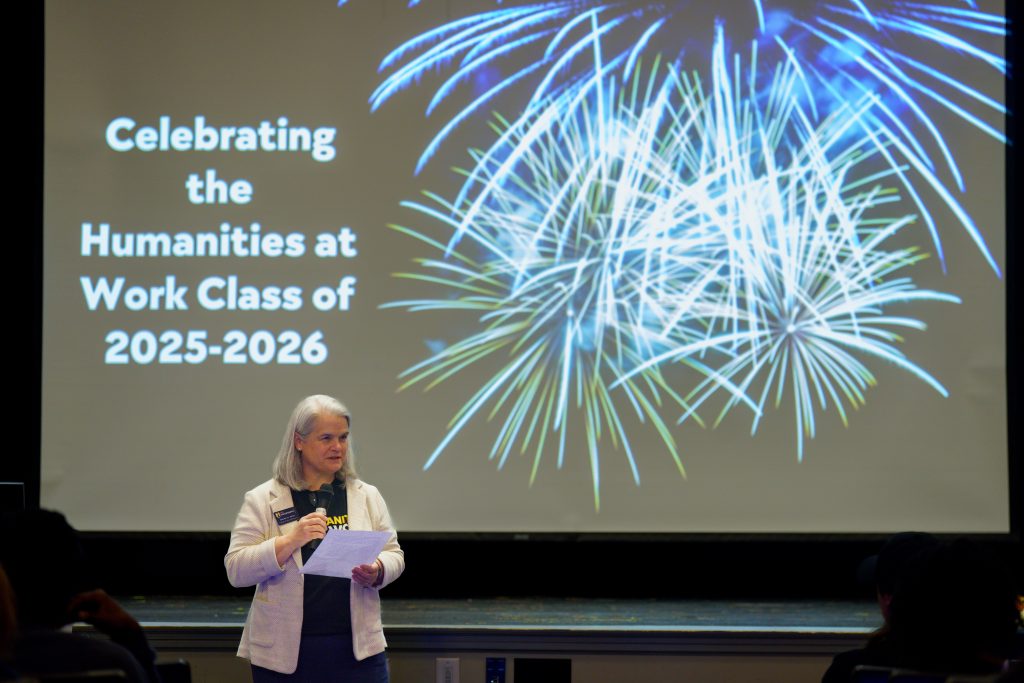
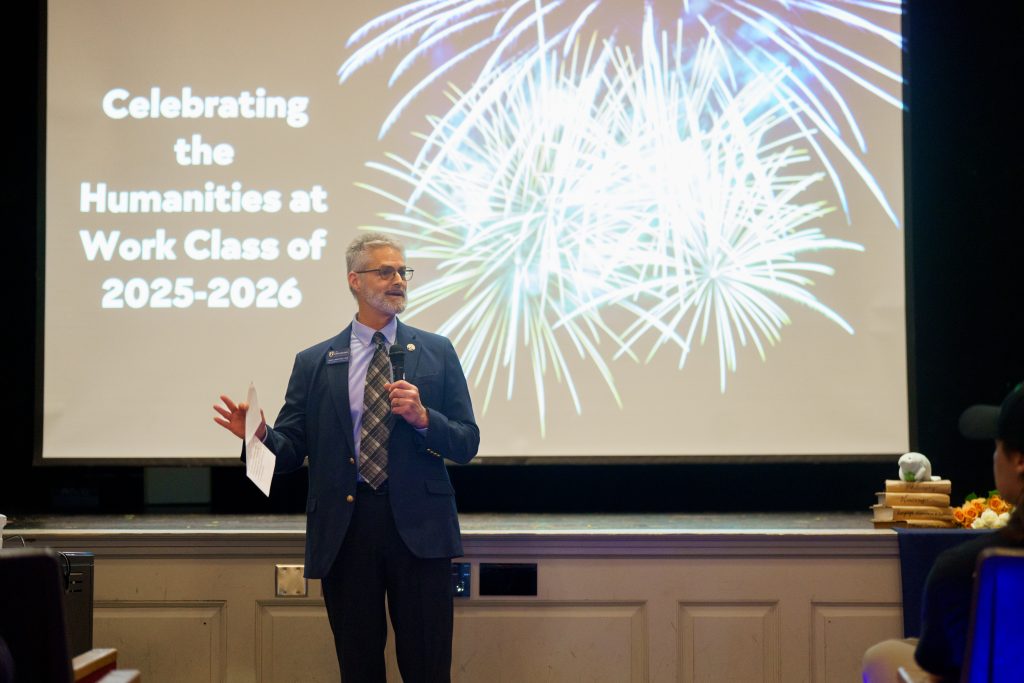
Dr. Maura Heyn, Associate Dean of the College of Arts & Sciences, who served as a co-principal investigator on the proposal that secured a $5 million grant from the Mellon Foundation to establish H@W, opened the celebration. She emphasized the program’s innovative tripartite structure and how it allows participants to utilize skills learned in the humanities and successfully navigate their internship experiences. H@W consists of three components:
- A two-semester, experiential class that provides students with guidance, time, and course credit
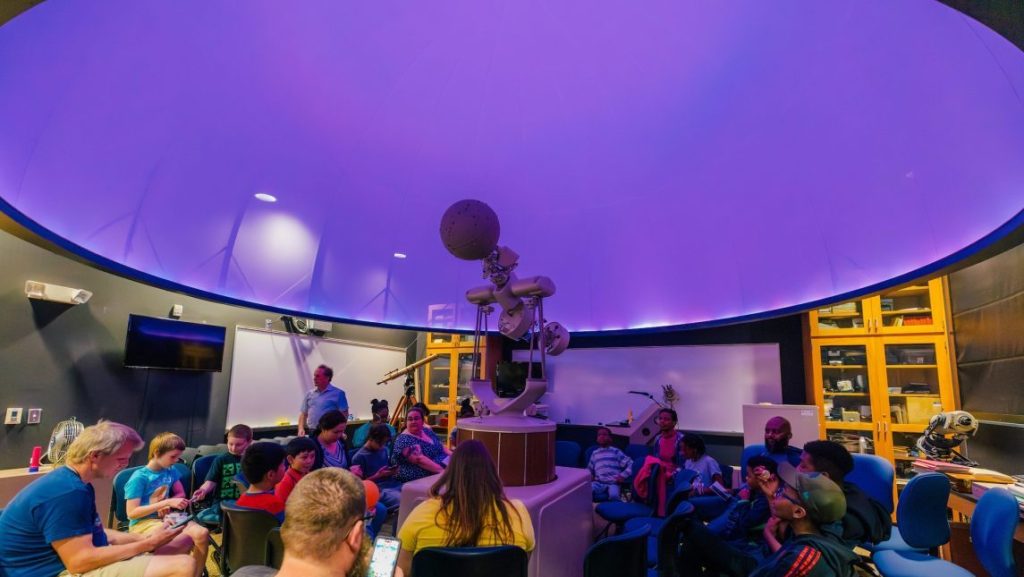
- A weekly agora lab, where students hear presentations from and interact with members of the greater Greensboro community
- A paid, year-long internship with a local community organization, where students spend five hours on-site per week
“This morning, you will see the many fruits of a program of this type,” Heyn said, “bringing together talented students and community partners in projects to both help our partners to achieve their goals and demonstrate to our students and the world that pursuing a degree in humanities is a choice that they can and should make. You will see here the myriad skills that our students bring to the workplace, and that is certainly a huge selling point of any one of the humanities disciplines.”
Dr. Alan Boyette, Provost and Executive Vice Chancellor, also addressed the graduates, highlighting the impact of students finding connection between learning and doing and applying what they learned in the classroom to the communities and organizations they served.
You have taken the insights, the habits of mind, the critical perspectives developed through the humanities, and you’ve applied them in real, meaningful ways. You have asked good questions, navigated ambiguity, communicated across your differences, and contributed in contexts that matter. That is the power of a humanities education.
Dr. Alan Boyette, Provost and Executive Vice Chancellor
Celebrating Community and Partnerships
Members of the H@W team recognized the significant support the program receives from campus and community partners.
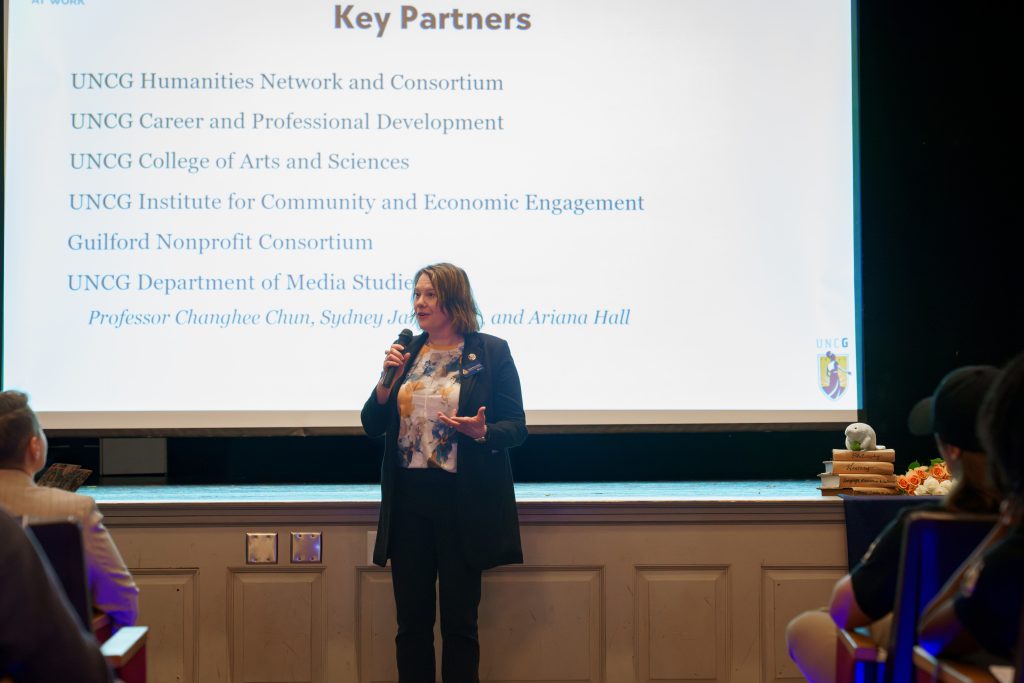
Dr. Heather Adams, Faculty Director for Humanities at Work, thanked the many members of the UNCG community that help make H@W operate. From individual faculty members and graduate assistants who take time to answer questions and mentor students to departments that support the framework and mission of H@W, Adamas explained their time, dedication, and insight are a key pillar of the program’s success.
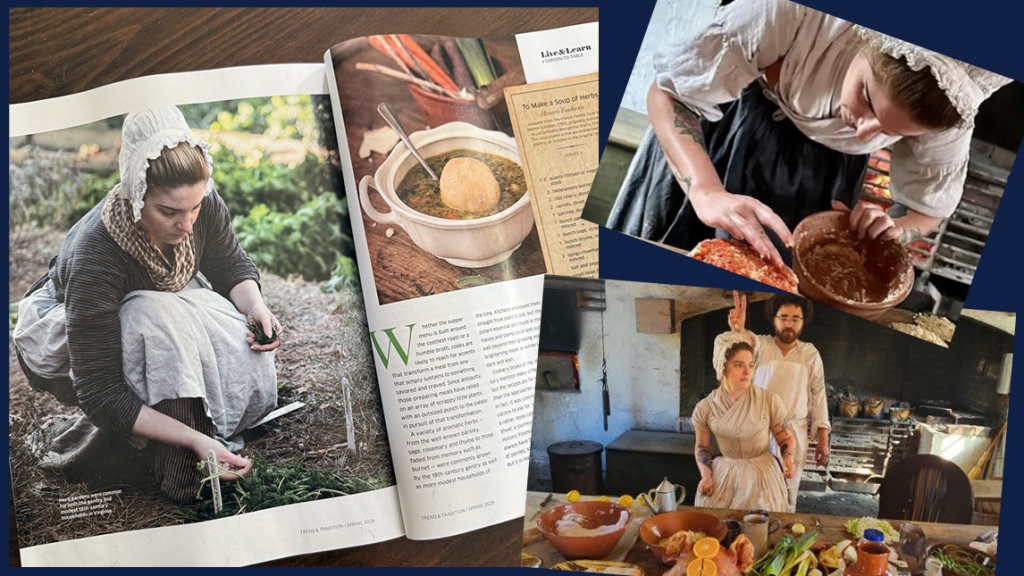
Dr. Lauren Shook, Internship Coordinator for Humanities at Work, recognized the program’s 12 community partners. These organizations range from museums and archives to afterschool programs, environmental sustainability organizations, and community support programs. She highlighted the intentional, hands‑on collaboration required to build meaningful internship experiences.
“What I love about our internship sites this year is that they span the range of organizations, and I think they really show how humanities majors can go to work in the spaces they can find themselves in,” Shook said. “Through all of this, students are learning about themselves, you learn about Greensboro, and they’re learning about the world.”
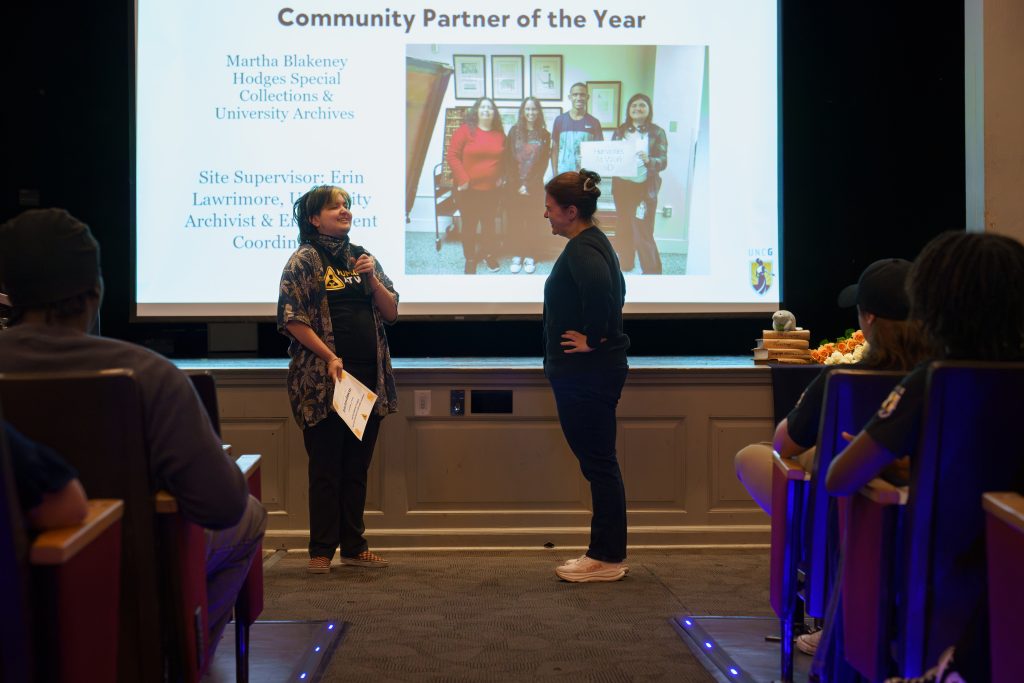
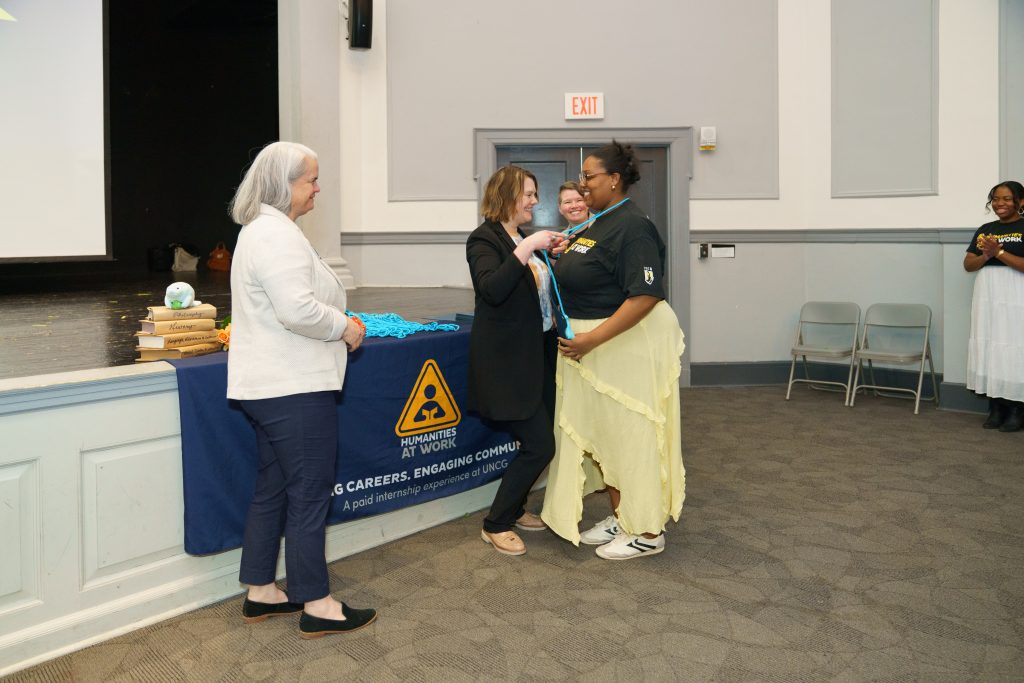
Shook also announced the inaugural Community Partner of the Year Award, presented to the Martha Blakeney Hodges Special Collections and University Archives and site supervisor Erin Lawrimore. Intern Piettr Codr presented the award to Lawrimore, describing her as “one of the most supportive, kindest, funniest people I’ve had the opportunity to work with.” Codr praised Lawrimore’s ability to encourage students to try new things and empower them to step into their own.
Radical Hospitality, Accountability, and Hope
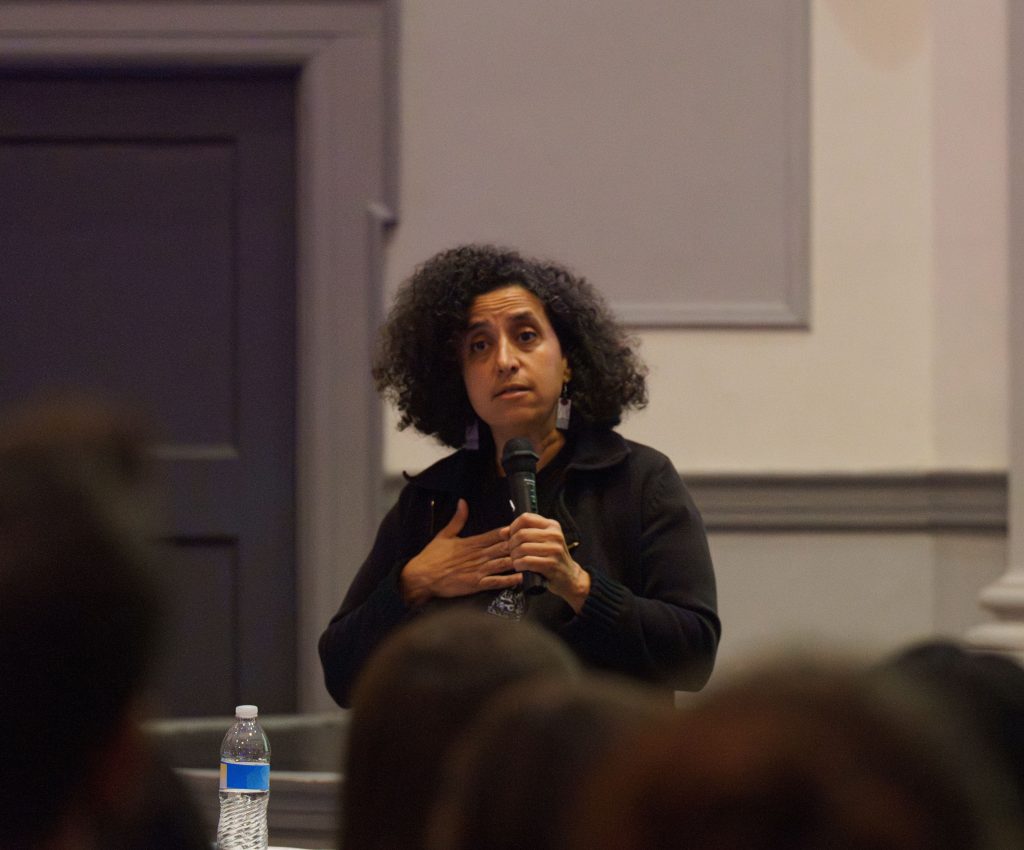
The keynote speaker, Dr. Diya Abdo, founder of Every Campus a Refuge and Lincoln Financial Professor of English at Guilford College, delivered a powerful address weaving together personal history, refugee advocacy, and the transformative potential of higher education. Drawing from her book American Refuge: True Stories of the Refugee Experience, she reflected on the responsibility institutions hold in fostering belonging.
Her message centered on three intertwined principles:
- Radical hospitality — acts of welcome that make people feel like they belong
- Radical accountability — understanding our institutional responsibility in ways that go beyond checking the box to performing and acting in ways that are rooted in social justice.
- Radical hope —imagination that allows us to have faith in worlds that extend beyond us.
Her words resonated with Humanities at Work’s mission and the students’ work in the community.
Showcasing Impact: Cohort Presentations
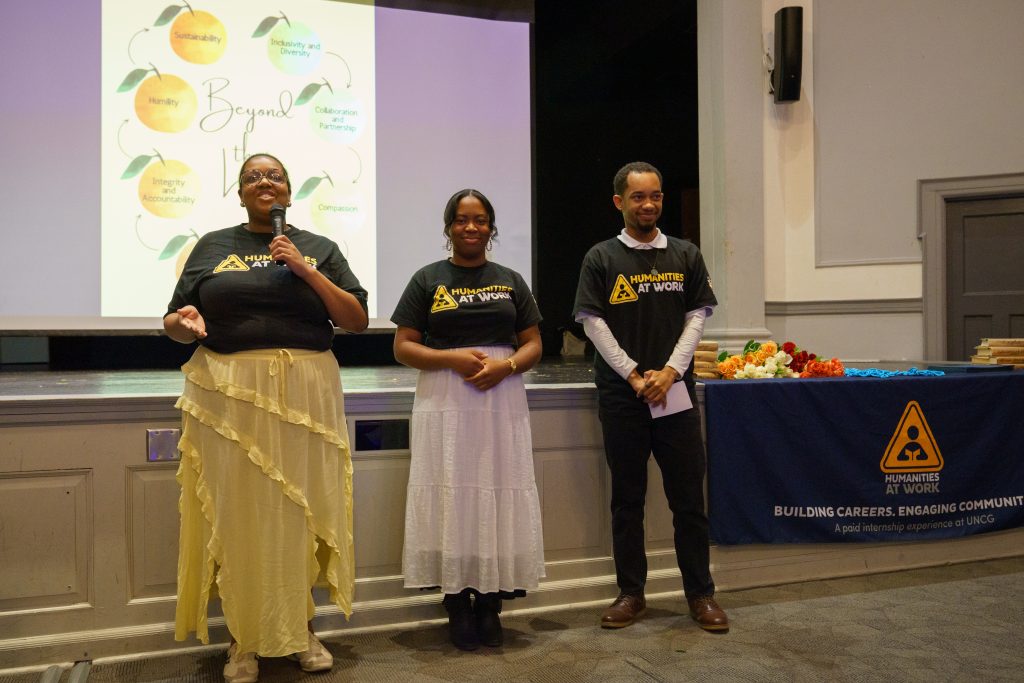
Cohorts from each internship were tasked with reflecting their experiences and creating a brief presentation and metaphor to illustrate their work. Three were selected to present at the end-of-year showcase.
Abundant Life Ministries
Students from Abundant Life Ministries described their year addressing food insecurity through community markets, shared meals, and interpersonal engagement through conversations. Their metaphor—an orange—symbolized the layered, interconnected nature of their work. The group explained, “we chose an orange because it grows in phases, much like everything else in life. It grows until they’re building on each other, creating a cool finished product. Abundant Life is that full finished product.”
Center for New North Carolinians
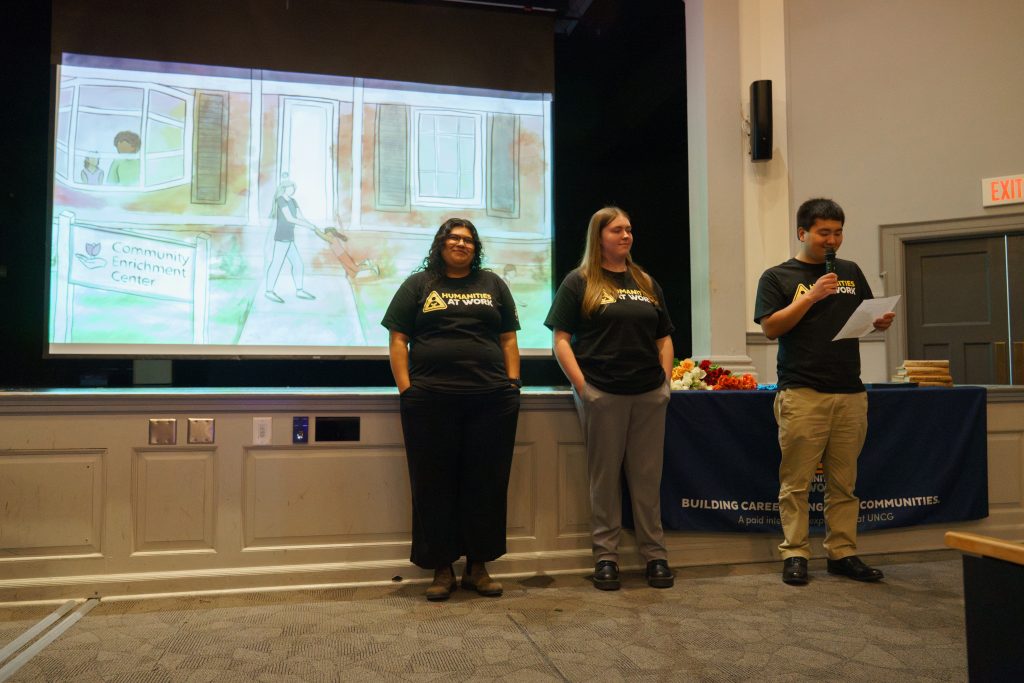
The Center for New North Carolinians cohort highlighted their tutoring and mentorship with young immigrant students, helping children expand their English language skills and vocabulary. Their work, they explained, uplifted students academically and personally. Their metaphor, an image of children sitting inside the center and playing outside, demonstrates that connection and collaboration happens inside and outside the classroom. The group explained: “Our goal for the year was to connect, collaborate, and ultimately uplift the students, all while learning what it means to be humanities students at work.”

Deep River Riverkeeper
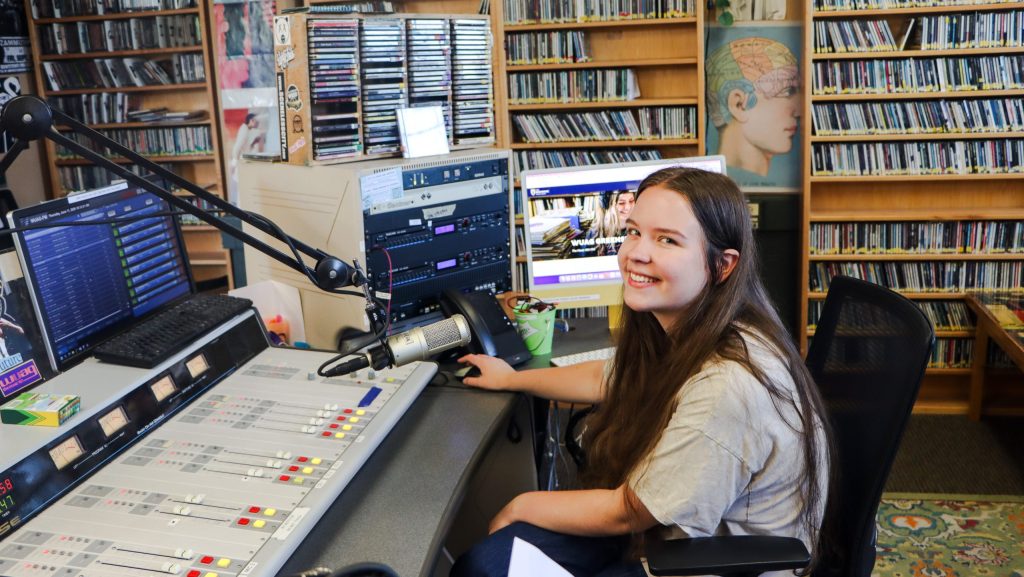
The Deep River Riverkeeper cohort used a metaphor of a virtual meeting to demonstrate how people seem to have lost connection with the Deep River and proposed ways to troubleshoot the connectivity issue. The group describes several projects they developed to help increase knowledge of and engagement with the river. These include a podcast, Deep River Originals keychains, and a bird bingo activity for children. “We gained the valuable experience of participating in the keeping of the Deep River, and with that we gained greater appreciation, both of the river itself and for the people who live on it.”
Looking Ahead
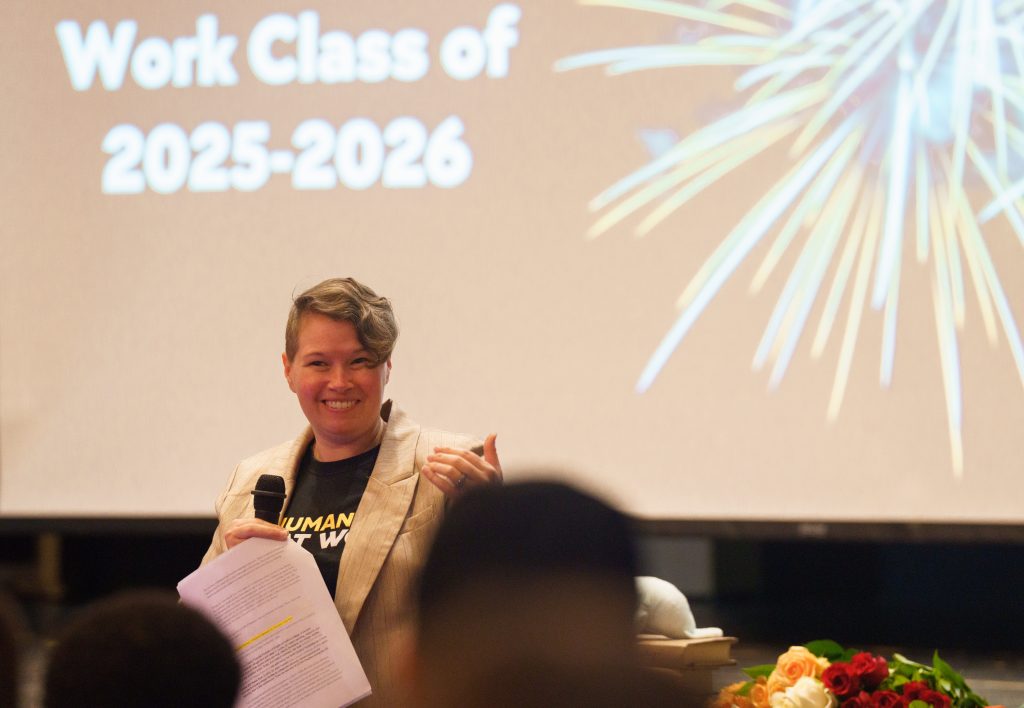
In her opening remarks, Dr. Jennifer Feather, noted that a study by the Pew Research Center said that half of US workers say they are extremely or very satisfied with their job overall and 64% say they are extremely or very satisfied with their relationships with their co-workers.
“But of course, I am a humanities major, and therefore, I do not believe that these statistics tell the whole story,” Feather said. “I believe that the people sitting next to you will be extremely satisfied with both their jobs and their co-workers. This faith is grounded in the year we have shared together. Throughout it all, I have come to the realization that meaning is made, not given. And satisfaction comes from how we show up for each other and our communities.”
By showing up for their communities, students have been given the opportunity to better understand themselves as well. Adams closed the ceremony by reflecting on the H@W journey and her hopes for the cohort.
“I hope that you have found this journey with Humanities at Work to be one of way-finding, a way of discovering,” Adams said. “I hope that while on this journey, you have learned about yourself and have started to more fully envision your future self as I have been able to see you: capable, passionate, and ready.”
In addition to celebrating the 2025-26 cohort, the H@W team is preparing for the next academic year. The program will welcome nine additional community partners, its first full cohort of five community student ambassadors, and 70 students for the 2026-27 cohort.
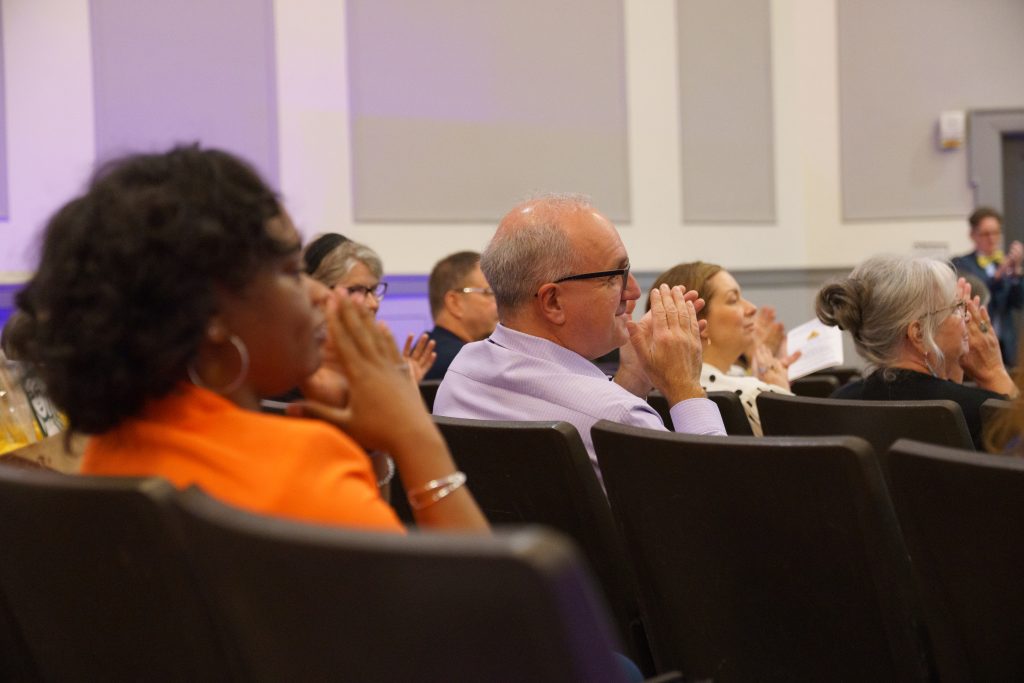
Showcase Photo Gallery
Story by Amanda Kennison, College of Arts & Sciences
Photography Courtesy of Humanities at Work
BUILDING CAREERS. ENGAGING COMMUNITIES.