In April 2024, it was announced that UNCG’s College of Arts & Sciences had received a historic $5 million grant to launch Humanities at Work, a program that will provide paid internships and supportive coursework to students in UNCG’s nine humanities disciplines. Here, we provide an update on this important initiative, which launches with its first cohort of students in spring semester 2025. The following story is adapted from the UNCG Magazine story, “Paid Internships. Professional Success.” Read the original here.
For students majoring in STEM or business fields, internship options tend to be relatively clear-cut: software development, human resources, lab research. Humanities majors, on the other hand, often have a harder go at it.
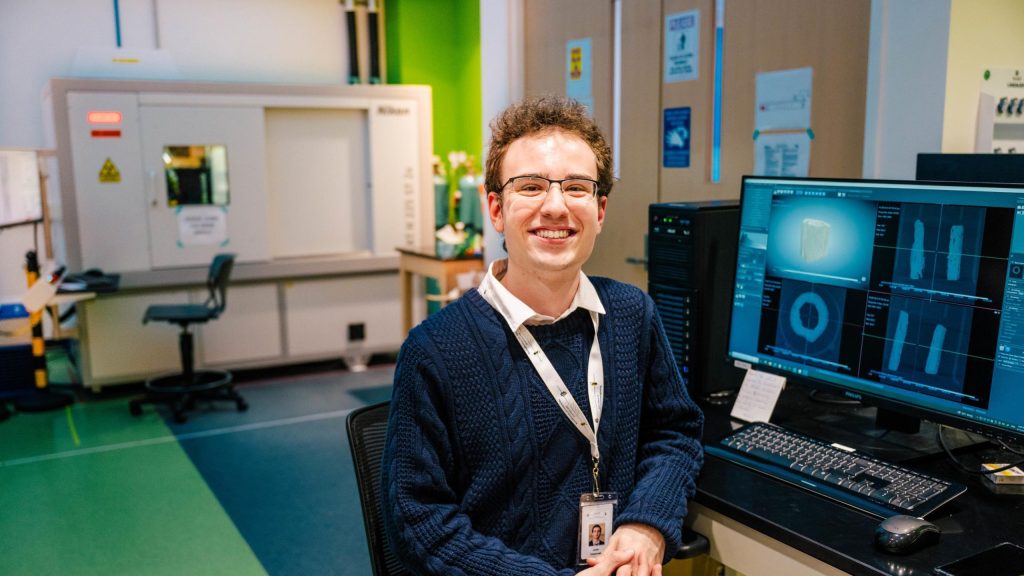
“We’re told all the time that internships are crucial, but actually landing one is tough,” says Wesley Britt ’23, a recent graduate of UNCG’s English Department. Britt reflects that he was involved in several clubs, received accolades, and served as a University Marshal. But after completing more than 150 applications, Britt received responses from just two internship opportunities – both unpaid.
Many humanities majors can relate. Not only can internships be slim pickings, but if they do find a potential match, students majoring in philosophy or history, for example, can struggle to convince employers of their qualifications. They may have the skills employers crave – strong communication, critical thinking, and cultural awareness – but humanities majors still battle bias about their career-readiness.
Laying a new foundation

Excitingly, UNCG’s College of Arts and Sciences has broken ground on a new initiative to address these challenges. Called Humanities at Work, this innovative internship and educational program promises to bring 650 paid internships over five years to students majoring in one of the University’s nine humanities disciplines: English; history; philosophy; ancient Mediterranean studies; international and global studies; languages, literatures, and cultures; religious studies; women’s, gender, and sexuality studies; and African American and African diaspora studies.
The internship program is funded by one of the largest grants in UNCG history – $5 million from the Andrew W. Mellon Foundation.
“The project will not only provide hundreds of UNCG humanities students with high-quality, paid internship experiences,” says Chancellor Gilliam, “but it will also help them to articulate the value of their humanities degree to potential employers, translating to fulfilling careers.”
The program – often shortened to “H@W” – has an innovative model. Over one academic year, students will work in small groups on a guided, paid internship with local nonprofit partners. Simultaneously, they will also be enrolled in a Humanities at Work course. The class will help direct the students’ internship projects while also teaching them valuable skills for translating their humanities-based strengths into work beyond the classroom.
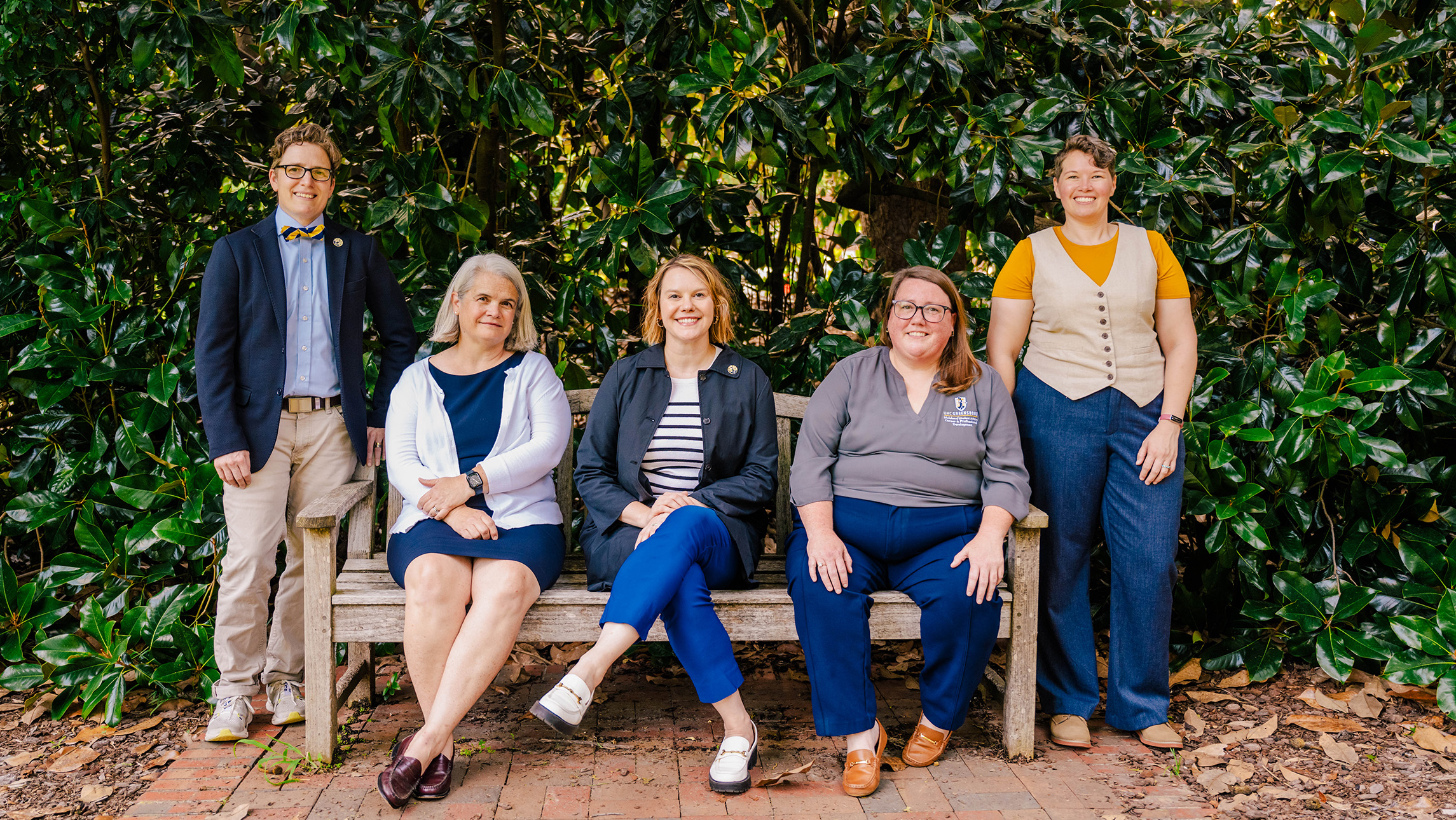
“The cohort model is one feature that sets Humanities at Work apart, even from other internship programs with a curricular element,” says Dr. Heather Adams, an English professor and a principal investigator on the project. “Instead of one intern, it’s a team, which enables students to learn from one another and become peer mentors.”
This group-based model also simulates professional work situations, while the course provides a space for students to make sense of any new and challenging experiences they might encounter “on the job.”
Student feedback has been infused throughout every phase of developing Humanities at Work. But to ensure success, such a program needs to consider the needs of employers, too.
That’s one reason why the H@W team has collaborated with the Guilford Nonprofit Consortium, a key partner in connecting interns and nonprofit sites. By coordinating efforts to interview, place, and train interns at these sites, the program hopes to take pressure off employers. Providing class time and guidance on students’ internship projects will further help nonprofits develop capacity to support their missions.
Humanities at Work is a game-changer.
– Chancellor Gilliam
Another key to success? Working closely with Dr. Megan Walters in Career and Professional Development (CPD).
“Together, we’re making sure that what we’re building aligns with what businesses and nonprofits are actually looking for, while also meeting the needs of our unique student body,” says Adams.
Building for the future
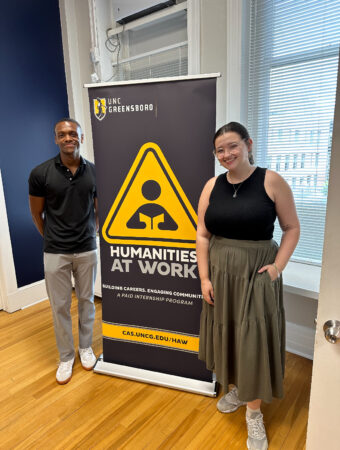
While highly innovative in approach, H@W has its roots in a longstanding collaboration at UNCG: Liberal Arts Advantage (LAA). Started by UNCG’s Humanities Network and Consortium (HNAC) in partnership with CPD, Liberal Arts Advantage has been helping students communicate the value of their liberal arts education since 2017. It has spread its message through classroom visits, alumni networking opportunities, and workshops. Now, with Humanities at Work, it’s time to add paid internships – and the program’s novel curricular cohort model – to the mix.
H@W will launch its pilot semester this spring. The leaders have already secured three partner sites: The Greensboro History Museum, the Weatherspoon Art Museum, and Abundant Life Ministries.
And they’ve hired Lauren Shook ’15 PhD to serve as internship coordinator and instructor of the Humanities at Work course. A graduate of UNCG’s English PhD program, Dr. Shook knows firsthand the value of a humanities degree.
“I’m most excited about helping students advocate for their passions so they can live out meaningful careers and lives,” she says.
The pilot program will start with 15 students but will eventually expand to serve an estimated 650 students and 130 nonprofits over the Mellon grant’s five-year period.
Sustaining H@W past the grant’s five-year timeline is a top priority for the team. Through individual donations and supplemental grants, the team is confident that Humanities at Work will become a staple program of UNCG, one that other institutions will look to for inspiration.
“We know that access to a paid, high-quality internship can change the entire trajectory of a person’s career,” says Adams. “That’s why we’re working hard to ensure such opportunities are available to all UNCG students – humanities majors included.”
Story by Elizabeth Keri, College of Arts & Sciences
Photography by Sean Norona, University Communications, and courtesy of Humanities at Work