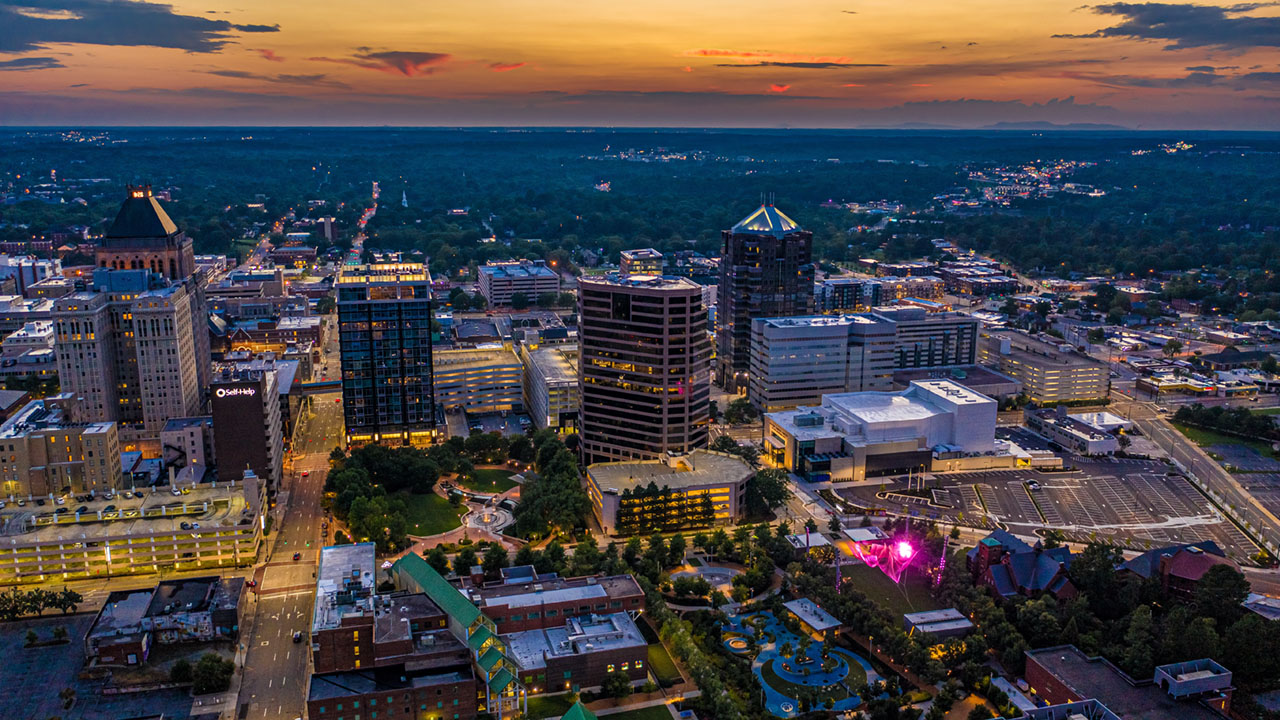
UNC Greensboro will host the 38th annual International Colloquium on 20th and 21st Century French and Francophone Studies, March 27 – 29, 2025 in downtown Greensboro. The event is organized by Dr. Cybelle McFadden, Associate Professor in UNCG’s Department of Languages, Literatures, and Cultures. Keynote speakers are Felwine Sarr, a Senegalese academic and writer who is the Anne-Marie Bryan Distinguished Professor of Romance Studies at Duke University; and Rokhaya Diallo, a French journalist, writer, educator, and award-winning filmmaker.
This colloquium fosters a transatlantic conversation on the complexities of justice and inclusion in the French and Francophone context. 2025 marks key anniversary dates, namely: the first elections in which French women voted (1945), the start of the Mouvement de libération des femmes (1970), the release of the groundbreaking film, La Haine (1995), the social unrest in response to the deaths of Zyed Benna and Bouna Traoré (2005), and the Black Lives Matter (BLM) movement in France following George Floyd’s murder (2020). Cultural, literary, and artistic expressions engage concepts of belonging, reckoning, diversity, and citizenship to reveal social challenges. Literary and cultural production have been imbricated in larger political turning points and events from the French Revolution grounded in Enlightenment ideals and the Haitian Revolution to literary interventions by Victor Hugo and Émile Zola. Committed literature (Albert Camus, Jean-Paul Sartre, and Simone de Beauvoir) and anti-colonial texts (Léopold Senghor, Aimé Césaire, Frantz Fanon, Édouard Glissant, Assia Djebar, and Maryse Condé), for instance, employ creative expression as a means of both engagement and social revolution. As contradictions pertaining to French universalist ideals, “liberté, égalité, and fraternité,” persist, literary and cultural production emerges both as a site toward and away from the political. While ongoing relationships between the metropole and Francophone spaces call for equitable environmental and social relationships, collective change is reflected through and emerges from shifts in literary and cultural production.